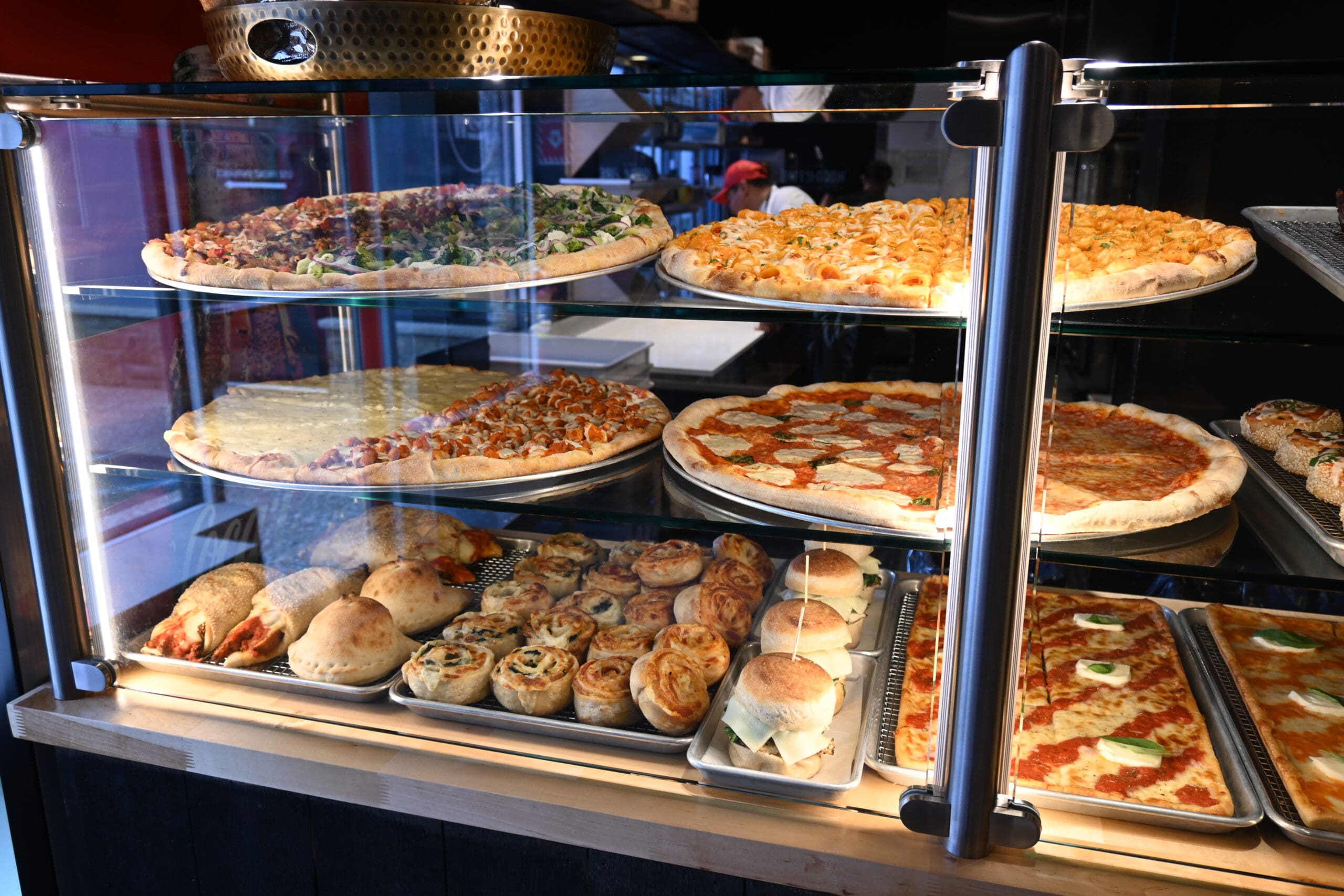
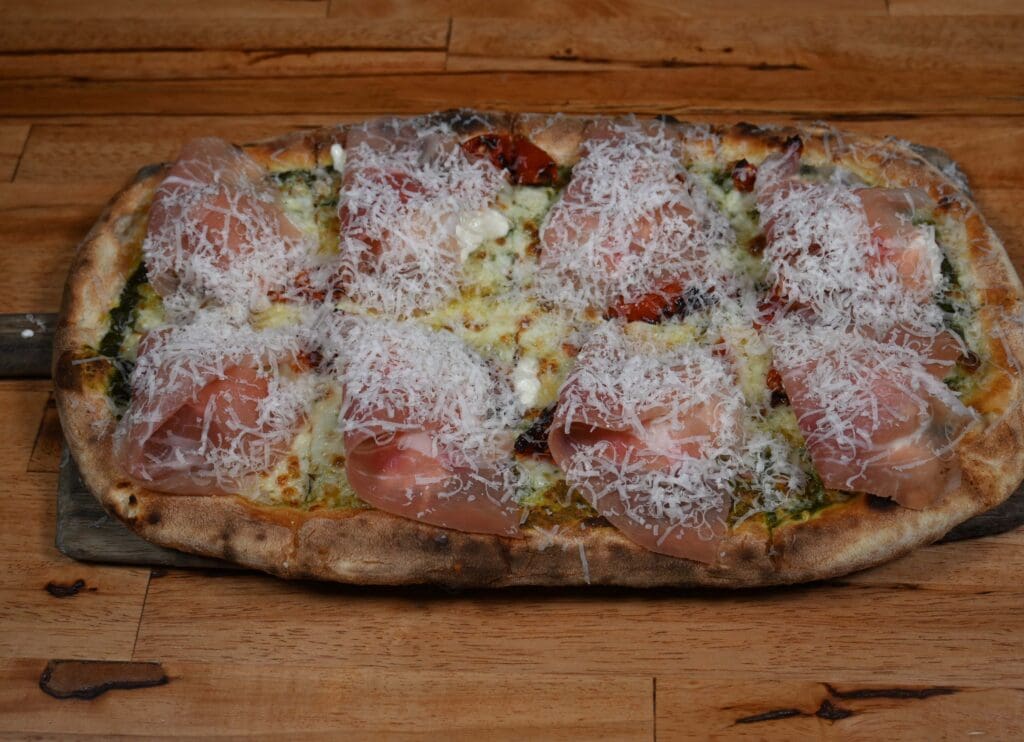
You know that first bite that makes you stop mid-conversation? Picture yourself in front of a steaming Margherita pulled from a roaring oven — crackly rim, little leopard blisters, a whisper of smoke. That memory is why you hunt out wood & fire pizzas. This short guide puts you in the baker’s shoes: what the heat does, how smoke should behave, and simple tests you can run with your eyes and tastebuds to tell a real wood-fired pie from marketing fluff.
1) Heat and Crust: The Physics That Makes You Love a Slice
Why a 60–120 second bake changes everything in Neapolitan pizza
In a wood-fired pizza oven, your pie can finish in 60–120 seconds. That short window is the heart of the Pizza baking process for Neapolitan pizza. The dough hits extreme heat and puffs fast, trapping steam and expanding the air pockets you built during fermentation. This is rapid oven spring, and it’s what gives you a tall, airy cornicione (the puffy rim) with a tender interior instead of a dry, bread-like bite.
Marco Vitale, professional pizzaiolo: “You learn an oven by how it puffs the dough — that first second of rise tells you everything.”
Heat transfer pizza: radiant heat, hot floors, and leopard spotting
Wood-fired baking is not just “hotter”—it’s a different kind of heat. The dome throws intense radiant heat down onto the top of the pizza while the stone floor conducts heat into the base. Together, this Heat transfer pizza combo creates:
- Crisp outside from fast surface drying
- Soft center because the inside doesn’t overbake
- Leopard-like blisters from quick, high-heat charring (toasty, not ashy)
In traditional ovens, heat is also non-uniform. You’re not baking in a perfectly even box—every oven has hot spots. After 4–6 hours of firing, a typical vault (dome) temperature can reach 546 ± 53°C, while the floor may sit around 453 ± 32°C. With steady wood feeding (about 9 kg/hour), the floor can climb toward a maximum asymptotic value near 629 ± 43°C. That’s why skilled pizzaioli “map” the oven and rotate the pie to chase the best balance of top char and bottom crisp.
Practical check: how the slice should feel
Lift a slice by the crust. It should bend slightly without collapsing, and it shouldn’t crack into dry crumbs. You want a base that holds toppings, a rim that feels light, and small char spots that taste toasted—not burnt.
2) Smoke, Flavor & Topping Integrity: You Should Taste the Difference
Smoke should add depth, not cover everything
With Wood fired cooking, the fire does more than heat the oven—it adds a light smoky aroma that makes the crust and cheese taste richer. The key is balance. A great Wood-fired pizza should never taste like a campfire. If the smoke is heavy or bitter, it usually means the fire wasn’t managed well, or the wrong wood was used.
Chef Lucia Martino: “You want smoke to flirt with the tomatoes, not walk off with the whole show.”
Hardwoods like oak, maple, and beech burn cleaner and more consistently than softwoods, so the flavor stays smooth and the heat stays steady. That clean burn helps you get savory complexity without harsh, ashy notes.
Quick bake = brighter toppings and better cheese
The biggest flavor difference comes from speed. In a true wood-fired oven, your pie often bakes in 60–120 seconds. That fast cook changes how heat moves through the pizza: intense radiant heat from the dome and hot floor heat set the crust quickly, while toppings cook just enough to stay fresh.
- Tomatoes stay vibrant and taste like tomatoes, not cooked-down paste.
- Basil keeps its perfume instead of turning dull and dark.
- Mozzarella melts into creamy pools without grease-out (when fat separates and turns the top oily).
This is where Crust browning burning matters: you want quick browning and small char blisters, not a scorched base that tastes sharp and dry. When the bake is fast and controlled, the crust gets toasted flavor while the toppings stay juicy.
A simple sensory checklist (use it at the table)
- Aroma: toasted dough + a faint, clean smoke note.
- Sauce: bright, slightly sweet, and clearly tomato-forward.
- Cheese: melted and creamy, not rubbery or greasy.
3) Oven Hot Spots & Thermal Reality (a slightly nerdy detour)
A wood-fired oven looks like one big blast of heat, but it doesn’t behave like a uniform box. Pizza oven hot spots form because the vault (dome), floor, and flue all heat and lose heat differently. That creates clear Heat distribution zones you learn to read—almost like a map.
Dr. Elena Rossi, food scientist: “Mapping hot spots is as essential as kneading—temperature patterns decide whether a pie hits perfection.”
Heat distribution zones: vault, floor, and flue
Research using thermal scanning shows that after 4–6 hours of firing, many ovens reach a pseudo steady-state: the vault stabilizes around 546 ± 53°C and the floor around 453 ± 32°C. That gap matters. The vault’s radiant heat drives fast top cooking (cheese melt, blistering), while the floor controls bottom char and crispness.
Even then, the oven isn’t “efficient.” Average Thermal efficiency oven performance is about 13 ± 4%, with heat loss mainly through flue gas (~46%) and also through the insulated chamber (~26%). Translation: the fire and airflow shape your hot zones as much as the bricks do.
Hot spots cooking: how pros keep pies consistent
Professional pizzaiolos don’t fight non-uniform heat transfer—they manage it. They use hot spots cooking on purpose: launching in a cooler area for bottom set, then moving closer to the flame for top color, then rotating to even out the rim.
- Rotation: small turns every few seconds to balance leopard spotting.
- Positioning: shift between hotter and cooler zones to match toppings (wet toppings often need more top heat).
- Timing: faster bakes rely on radiant heat; slower bakes need more floor control.
Quick tests you can run during service
- Temp check after 4–6 hours: use an IR gun to compare floor vs. vault and note your hottest quadrant.
- Visual color assessment: watch the rim—if one side blisters faster, that’s your hot lane.
- Fuel-rate reality check: higher feed rates can push floors toward an asymptotic max around 629 ± 43°C (reported near 9 kg/hour), which changes how fast the bottom chars.
4) How to Spot the Real Deal: A Practical Ordering Checklist
Wood-fired pizza: quick visual cues that don’t lie
You can learn a lot before the first bite. Real Wood-fired pizza usually shows clear signs of high heat and fast cooking.
- Leopard spotting on the crust: small dark blisters, not one thick burnt ring.
- Lift and bend test: the slice should hold, but the center may droop slightly—classic Neapolitan pizza characteristics.
- Cheese: look for creamy melted pools, not a stiff, uniform layer.
- Sauce: it should taste bright and tomato-forward, not watery or cooked into paste.
- Aroma: toasted dough plus a hint of smoke—never harsh campfire.
Pizza oven performance: what the staff’s moves can tell you
During a rush, quality depends on reading heat patterns and managing the fire. If you can see the oven, watch for pro habits that support steady Pizza oven performance:
- Rotation: pies get turned often so one side doesn’t scorch.
- Strategic placement: the pizza moves closer to the flame to finish, then away to avoid burning.
- Fast bake timing: many wood-fired pies finish in about 60–120 seconds; longer bakes can dry toppings out.
Menu sanity check: order the classics first
If a place is truly dialed in, it will shine on simple pies. Use these as your authenticity test:
- Margherita pizza: checks dough, heat, and balance (tomato, mozzarella, basil).
- Marinara: no cheese, so the sauce and crust have nowhere to hide.
- Pepperoni (or spicy salami): shows how the oven renders fat—look for crisp edges without greasy puddles.
Giorgio Bianchi, pizza judge: “If a Margherita wobbles the right way and smells like toasted dough, you’ve found someone who knows their oven.”
What to avoid when you’re ordering
- Overly greasy cheese that floods the center and turns the crust soggy.
- Uniform golden crust with no blistering (often a sign of lower heat or a different oven style).
- Heavy smoke flavor that overpowers everything—good wood fire is subtle.
5) Wild Cards: Anecdotes, Analogies & Tiny Experiments You Can Try
A rainstorm slice test you won’t forget
Picture this: you duck into a shop during a sudden rainstorm and end up with two slices from two places. One was baked slow in a cooler oven, and by the time you step back outside, it turns soft and soggy, like warm bread with toppings. The other came from real wood & fire—still light, still crisp at the edge, with that quick-baked snap that holds up even in damp air. You don’t need a lab to remember which one felt “right.” That’s the point: fast, high heat locks in texture before moisture can win.
Hot spots cooking: treat your oven like a tide map
Every oven—wood-fired, gas, or electric—develops its own heat distribution zones. Instead of fighting them, imagine you’re reading a tide map. The hot spots are reefs to navigate, not enemies to eliminate. In wood ovens, the side near the flame can brown faster; the center can be steadier. Once you accept that, you start thinking like a cook using Professional baking techniques: rotate, shift, and choose the right “water” for the right “boat.”
Try a simple mindset shift: when you face an unfamiliar oven, map it like a treasure hunt. You’re not looking for one perfect spot—you’re looking for the “gold” spot for your pizza style. A softer Neapolitan-style pie may like a slightly calmer zone; a crispier artisan pie may benefit from a hotter patch for stronger blistering.
Alessandra Fabbri, culinary educator: “Small tests tell big stories—taste three slices from different oven positions and you’ll see the pattern.”
A tiny experiment you can do at any pizzeria
Order a Margherita and a pepperoni. The Margherita shows you how the oven treats moisture: look for bright sauce, basil that still smells fresh, and cheese that melts into creamy pools without turning rubbery. The pepperoni shows you how the heat hits fat: do the edges cup and crisp, or do they stay flat and greasy? If one side browns faster, you’re seeing Hot spots cooking in action—and you’re learning the shop’s heat distribution zones just by tasting. That’s how you turn a meal into a quick, real-world read on heat, smoke, and crust.
TL;DR: Wood-fired pizza ovens use intense heat and subtle smoke to create airy, blistered crusts and brighter toppings. Look for leopard spotting, a balanced base, and creamy, melted cheese; start with a Margherita to judge authenticity.